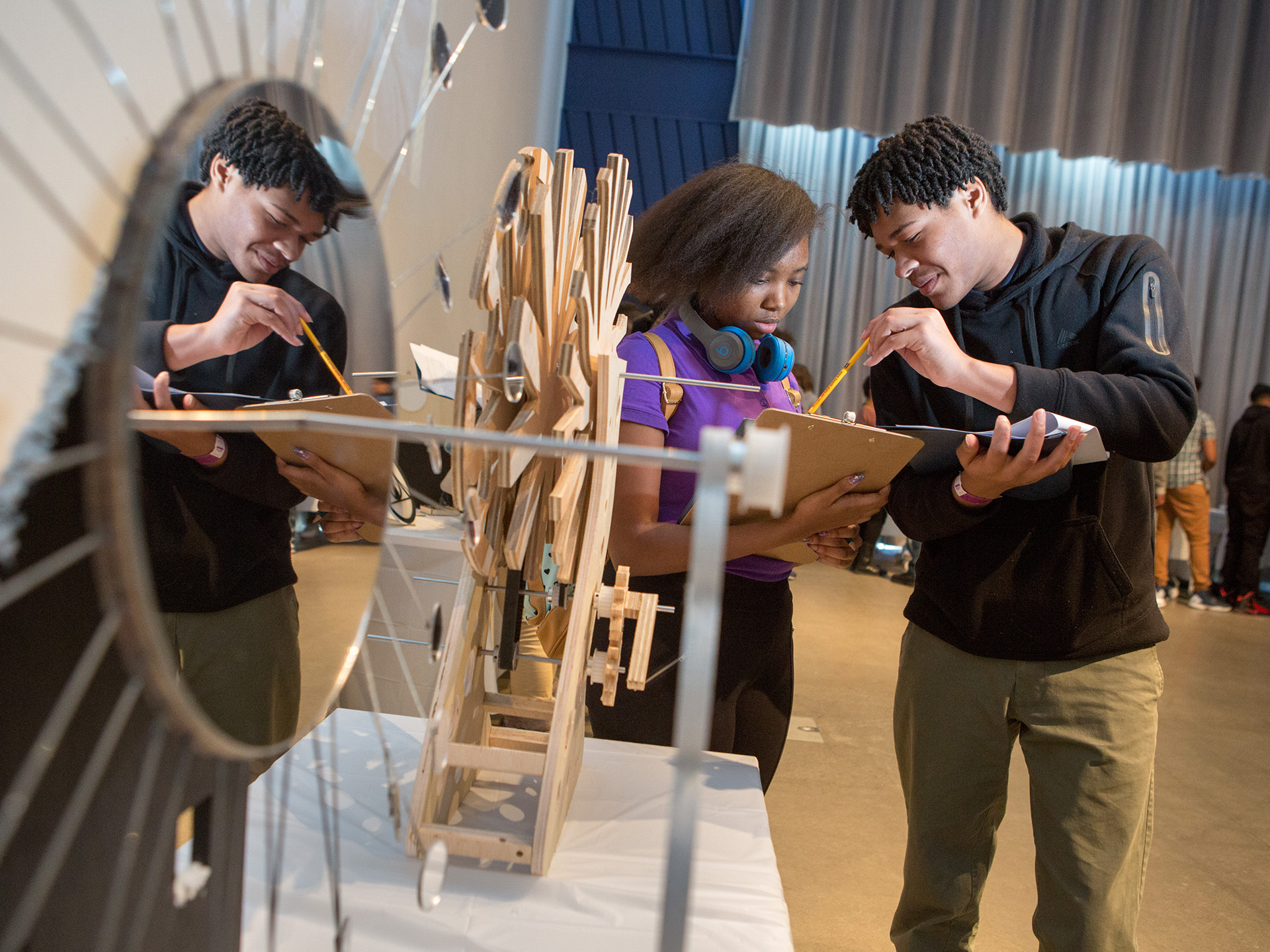
A community college student pursuing a bachelor’s in pre-medicine adds up her semester costs before registering. Her textbooks total more than $850, forcing her to weigh tuition and materials against rent, gas, and even groceries. For many students, the price of course materials alone can close the door to college. Nearly two in three college students report skipping a required textbook because of the price, directly impacting their ability to stay enrolled or successfully complete their classes.
This type of inequity in education is one of the problems the open education field was created to address. Launched by the Hewlett Foundation in 2001, the initiative aimed to ensure broad access to education and expand who could create and share knowledge, advancing learning for students across different cultural and socioeconomic backgrounds locally and around the world.
As a starting point, Open Educational Resources (OER) would build an open online network of free, high-quality educational content for students and educators in the U.S. and abroad who might otherwise face economic barriers to access. Course materials would be adaptable, so teachers could customize lessons to reflect their students’ history and culture. This would also create a two-way exchange of knowledge among states and between countries.
That vision took shape beginning with a single grant.
The first “unlock” of knowledge sharing in higher education
In 2001, as the internet took hold in classrooms, Hewlett and the Andrew W. Mellon Foundation, a longtime funder of higher education and the humanities, committed $11 million, split evenly, as their first OER grant to help MIT begin publishing its entire course catalog online for free, a goal MIT would fully reach six years later. No university had done anything like it before.
Paul Brest, Hewlett’s president at the time, said he hoped the project would establish that ideas are, at heart, “the common property of all of us,” not something companies own and profit from, and that MIT’s example would prompt other universities to follow. MIT President Charles Vest shared the sentiment, describing MIT’s OpenCourseWare (OCW) as “opening a new door to the powerful, democratizing, and transforming power of education.”
When you share money, it disappears; but when you share knowledge, it increases.
MIT President Charles Vest
OCW provides the lecture notes, problem sets, and videos from more than 2,500 MIT courses at no charge, and it still runs today. Across its website and YouTube channel, MIT reports about 25 million annual users and over 500 million users since OCW’s inception, including students at other institutions, self-directed learners, and educators who bring the materials into their classrooms.
Jean-Ronel Noel, co-founder of Enersa, a solar-lighting company serving nearly 60 villages and towns in Haiti, was one notable self-learner. OCW taught him the principles of integrated circuits he needed to get his company off the ground.
President Charles Vest explained why MIT gives its material away for free: “When you share money, it disappears; but when you share knowledge, it increases.”
In 2002, Hewlett expanded its investment to include Connexions, an open library project founded in 1999 and led by Rice University Professor Richard Baraniuk to help people create, share, and adapt educational materials. In 2012, it rebranded as OpenStax. Now considered the world’s largest open textbook publisher, OpenStax serves high schools and more than 70% of U.S. colleges and universities. Its materials and technology have reached 49 million students, saving them an estimated $3.8 billion.
Following these early investments, Hewlett helped convene a UNESCO meeting in Paris, where a small group of educators, mostly from low- and middle-income countries, coined the term “Open Educational Resources” and shaped what OER should look like for their own countries. That exchange later led to new initiatives, including OER Africa, which was founded by Saide in 2008, and AfLIA, the African Library and Information Associations and Institutions network, which began in 2013 and now leads OER efforts across Africa.
In 2007, with a grant from Hewlett, the Institute for the Study of Knowledge Management in Education (ISKME) built OER Commons, an early digital public library aggregating free course materials from multiple sources including MIT’s OCW. In 2008, the OpenCourseWare Consortium formed, linking similar OER projects at universities worldwide.
Expanding access for younger learners
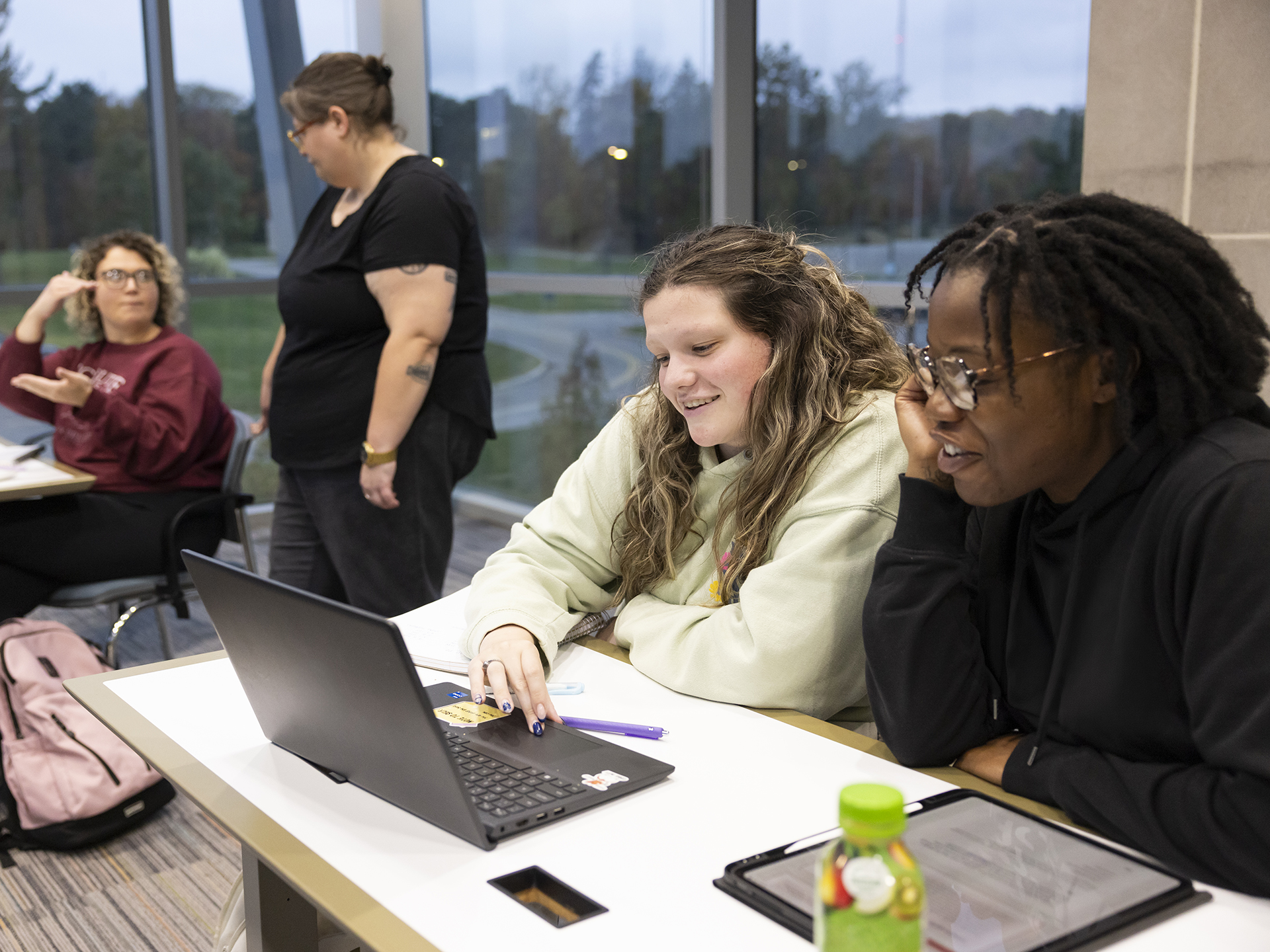
In 2016, the OER program expanded to reach learners well before college, from kindergarten through 12th grade. This meant more than putting existing lesson plans online the way MIT had with its course catalog. K-12 districts need a fully sequenced curriculum for different grade levels, so Illustrative Mathematics, EL Education, OpenSciEd, and iCivics built original, standards-aligned curricula, openly licensed from the start.
OpenSciEd was codesigned with a consortium of 10 founding states, which recruited more than 900 teachers to field-test the curriculum before its public release. Students reviewed it, too, so the questions and curiosities of middle- and high-schoolers helped shape the final materials. By 2023, 58,000 teachers were using OpenSciEd.
ISKME and PhET Interactive Simulations — a University of Colorado Boulder project founded in 2002 that builds free, research-based science and math simulations now used more than 250 million times a year in more than 130 languages — had been doing similar work in K-12 for over a decade when this pivot happened, and continued to grow alongside the program’s newer curriculum-building efforts.

The curricula developed as OER earned top ratings from EdReports, the academic equivalent of Consumer Reports. In 2018, Illustrative Mathematics’ 6-8 grade curriculum, released the year before, earned EdReports’ top ratings across all three review gateways. Its newest version, IM Math v.360, now holds all-green ratings across every grade band, K-12. EL Education’s K-5 curriculum did the same for elementary literacy that year, earning the highest score EdReports had ever given a K-5 English Language Arts program. And OpenSciEd earned all-green ratings on every course it submitted for review in 2025, becoming the first organization EdReports had ever given top marks for all its reviewed science courses.
Stacey Cole, who oversees education services for an Iowa school district that adopted it, says that teachers used to spend hours outside class finding or creating materials to fill the gaps in their old curricula. EL Education’s materials let teachers focus on students’ needs instead.
Making curricula more relevant
Open for Antiracism (OFAR), a program of the Community College Consortium for Open Educational Resources (CCCOER), shows OER’s evolution at the community college level. CCCOER was founded in 2007 at Foothill-De Anza Community College District, which launched the Community College Open Textbook Project the following year — the field’s first sustained effort to bring OER specifically into community colleges. OFAR builds on that foundation and the program now includes more than 200 faculty across more than 40 California community colleges, as well as a community college in Hawaii as it looks to expand more nationally in the future. With OFAR, educators use OER to center their students’ cultural identity and community instead of following a one-size-fits-all textbook and syllabus.
Angela DeBarger, Hewlett’s Education program officer from 2017 to 2025, says students feel seen in their coursework, a core OER value that no dollar-savings figure can convey.
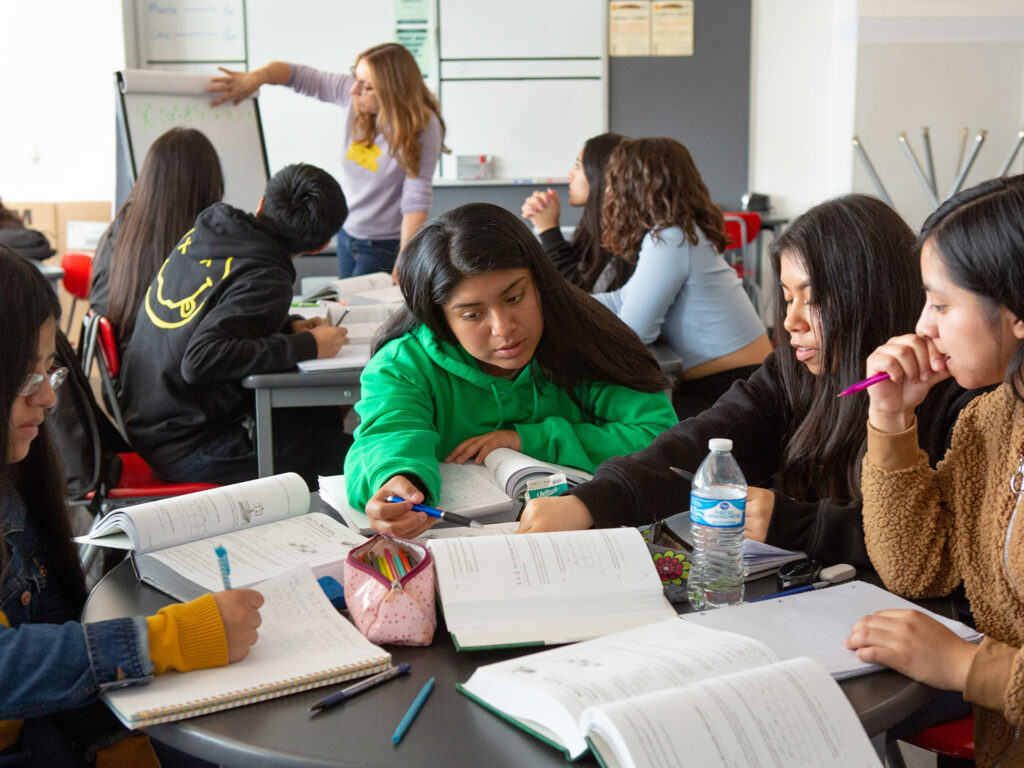
Because OER materials are open licensed rather than standard copyright, teachers and professors are free to modify them, unlike a copyrighted textbook, which only the publisher can change. That means a teacher can localize a unit to better fit her students’ interests and needs.
A field that earned its marks
OER’s accolades were hard for publishers to ignore. Open textbooks introduced new competition into the market. Economist Mark J. Perry has argued that their growth helped slow the rise in textbook prices, a pattern he calls the “Open Textbook Effect.”
In 2026, the American Association of Colleges and Universities (AAC&U), whose national OER study Hewlett helped fund, named Open Educational Resources a “high-impact practice,” a formal designation AAC&U has used since 2008 to identify teaching methods with proven track records of improving student outcomes. Drawing on 700,000 student records across 15 institutions, the study found students using OER were less likely to withdraw from courses and more likely to finish their degrees on time, gains that were especially pronounced among students who typically take longer than four years to finish. And more of them earned A’s.
A separate Hewlett-commissioned study by Ithaka S+R, a nonprofit that promotes access to knowledge and education worldwide, drew on interviews with OER leaders across four states and found the best programs were those woven into an institution’s core priorities.

Open Education comes of age
The open education field’s capacity to act at scale has been ramping up, from individual practitioners and institutions to entire systems, networks, and coalitions — the kind of infrastructure that cannot be built on short-term grant cycles.
Nationally, groups like Community College Consortium for OER, the Open Education Network, and the Rebus Foundation have continued to expand forums for collaboration and coaching for educators and librarians. The Open Education Network currently serves more than 1,800 colleges and universities. In 2018, three public university systems — the University System of Maryland, the City University of New York (CUNY), and the State University of New York (SUNY) — founded DOERS3 (Driving OER Sustainability for Student Success) to coordinate OER at the system level rather than leave it to individual campuses. The collaborative has since grown to 50 public higher education systems and statewide organizations across North America, serving over 11 million students at more than 1,400 colleges and universities in the U.S. and Canada. In 2025, the Open Education Association launched to represent the field nationally and promote coordination around shared goals.
Internationally, partners like OER Africa, AfLIA, and SPARC Europe are working to expand access across continents and innovating to keep growing. International agencies like UNESCO and Commonwealth of Learning are ensuring governments have the capacity to implement OER policies effectively.
Open education’s influence now extends to shared infrastructure that serves the public good. Openly licensed materials provide a foundation for AI tools and large language models, with clear permissions for reuse. Hewlett also helped OpenStax build research capacity to launch SafeInsights. This shared national infrastructure for educational research brings researchers, educators, and learning platforms together to safely study how students learn and translate those findings into better educational experiences.
These are strong signs of a field that has come of age and is ready to chart its own course into the future.
Open Education’s next chapter
Twenty-five years after that first MIT grant, Hewlett is transitioning from its role as the field’s anchor funder. The foundation is revising its Education strategy to look beyond the two areas that have defined the program — Open Education and K-12 Teaching and Learning — to a wider range of settings that increase access to real-world learning experiences and strengthen human connections. It is rare for a single philanthropic strategy to remain over such a long period, and that’s a testament to open education’s strength.
Looking ahead, DeBarger says the mission behind open education is as urgent as ever. “We want to make sure teachers and students have what they need to learn. And we want to make sure that people see themselves and their communities in what they are learning, and can be part of a global community that builds and shares knowledge collectively.”