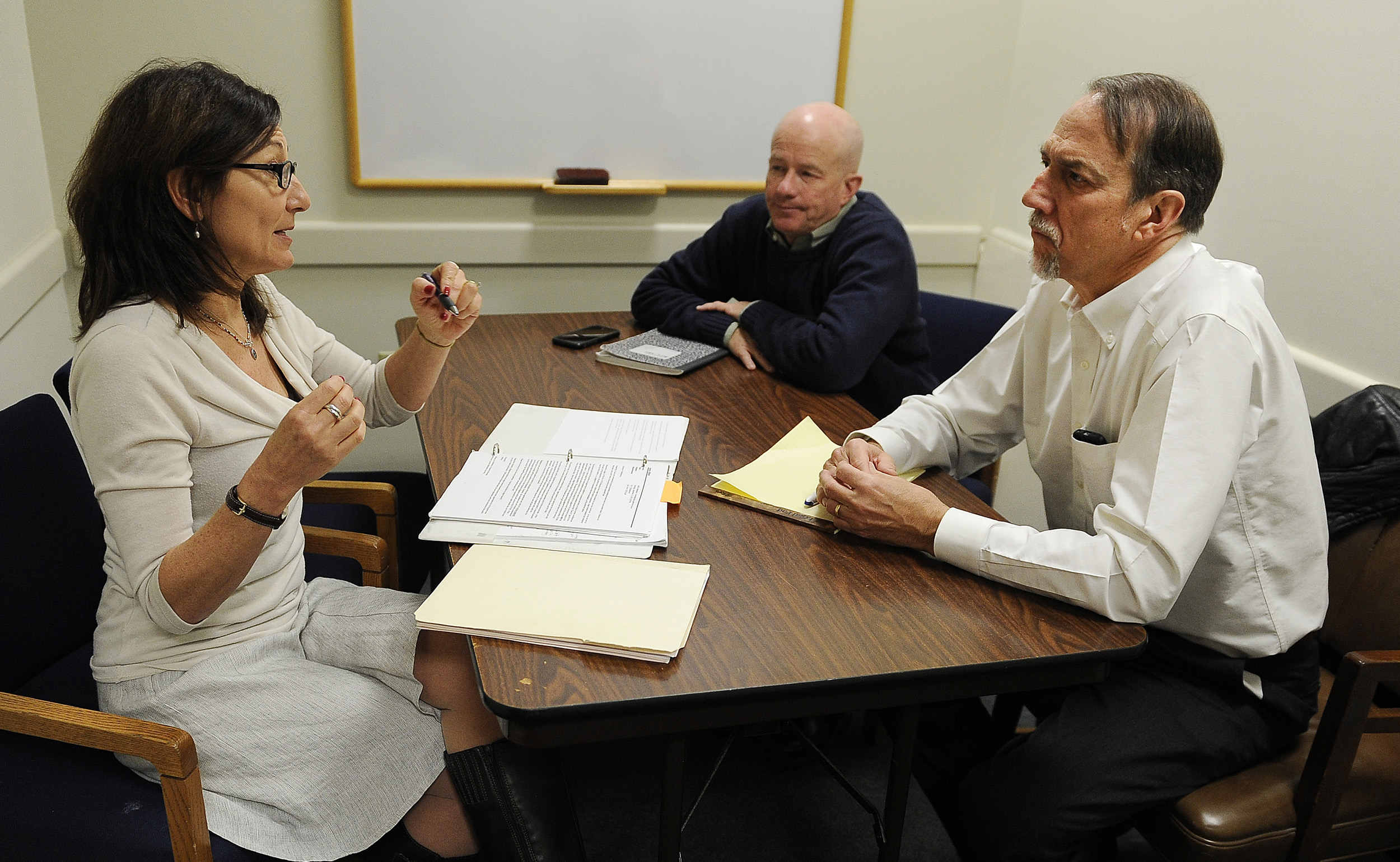
In San Francisco in 1978, a landlord and tenant sat at a folding table across from a stranger. The stranger charged no fee and didn’t have a law degree, just weeks of training and a set of ground rules for how the conversation would go: Both sides talk, both sides listen, and an earnest effort is made to achieve a win-win outcome that minimizes costs and preserves relationships.
This was the Community Boards Program, one of the first neighborhood mediation efforts of its kind in the country, and the result of one of the Hewlett Foundation’s earliest grants in a field that didn’t yet have a name.
The initiative eventually became the Hewlett Foundation’s Conflict Resolution Program in 1984. Over the next 20 years, Hewlett put more than $160 million behind a powerful idea: that resolving conflict could become a field of practice, with its own scholars, standards, and reach far beyond landlord-tenant disputes. By the time the Conflict Resolution Program ended in December 2004, it had made close to 900 grants to more than 320 organizations, resolving disputes from neighborhood tables and grade school playgrounds to civil war peace negotiations around the world.
A shared conviction
Hewlett’s Conflict Resolution Program traces back to a shared conviction by Bill Hewlett and Roger Heyns, the foundation’s first president. Bill Hewlett watched land-use disputes he cared about consume years and fortunes in court. Heyns arrived in 1977 from UC Berkeley, where, as chancellor, he had spent the 1960s caught between student radicals and Governor Ronald Reagan during some of the tensest years on any American campus. A social psychologist with a specialty in labor-management relations, Heyns left Berkeley believing that a great deal of destructive conflict could have gone very differently if the people involved had better tools for working through it. Before Heyns took the Hewlett job, the two men agreed the foundation would pursue their shared interest.
The field they wanted to support barely existed, recalls Steve Toben, who led Hewlett’s Conflict Resolution Program from 1991 to 2000. “Heyns felt that the field of conflict resolution was underdeveloped. There were labor arbitrators and mediators who functioned as old-school mentors to apprentices, but there was no systemic body of knowledge that explored the origins and the dynamics of conflict.” Heyns compared conflict resolution in those years to medicine before it became grounded in science: practiced by rules of thumb, passed from mentor to apprentice, with no way to develop new knowledge or test what worked.
The foundation officially launched its Conflict Resolution Program in 1984, with a first-year budget of $1.4 million and a program officer, Bob Barrett, who designed a strategy with Heyns that focused on theory, practice, and infrastructure.
Hewlett would fund the researchers working out why conflicts spiral and what resolves them; the practitioner organizations doing the mediating; and the associations that could hold the field together as it grew. The first grant under that strategy, $500,000 to Harvard’s Program on Negotiation, was made in 1984. Within a decade, Hewlett was funding 18 university conflict resolution theory centers nationwide.
The theory centers were more than just an academic checkbox. At Harvard, Stanford, Michigan, Minnesota, and more than a dozen other universities, economists, psychologists, and lawyers studied conflict side by side, producing a body of scholarship that the program’s 1995 evaluation, conducted by Hofstra University law professor Baruch Bush, called “immensely productive” and “of tremendous value to the field.” Anecdotally, one leader in the field put it more bluntly, saying at the time that of the 100 most influential books written on conflict resolution, none was more than once removed from Hewlett funding.
Helping schools, nursing homes, and workplaces manage disagreements
On the ground, in practice, the foundation looked for what Toben calls lighthouse organizations. “Concrete examples of organizations working in different sectors — community, family, environment, labor, faith — that you could hold up and say, ‘here’s what’s possible,’” Toben explains.
By the 1990s, from its early development in the areas of environment, public policy, family, and community disputes, the foundation applied the tools of conflict resolution to new social problems and sectors. It supported leading organizations in commercial disputes; employment, labor relations, and conflict in the workplace; and disputes in schools, religious organizations, health care, nursing homes, and criminal law, to name but a few.
For example, the Council of Better Business Bureaus built a national program that gave customers a way to resolve complaints against companies without going to small claims court. The Workplace Institute and the Center for Employment Dispute Resolution did similar work for conflicts on the job, aimed at solutions to avoid lawsuits. In Hewlett’s home state, the California Foundation for Improved Employer-Employee Relations helped school districts and teachers unions work through labor negotiations to avoid a strike.
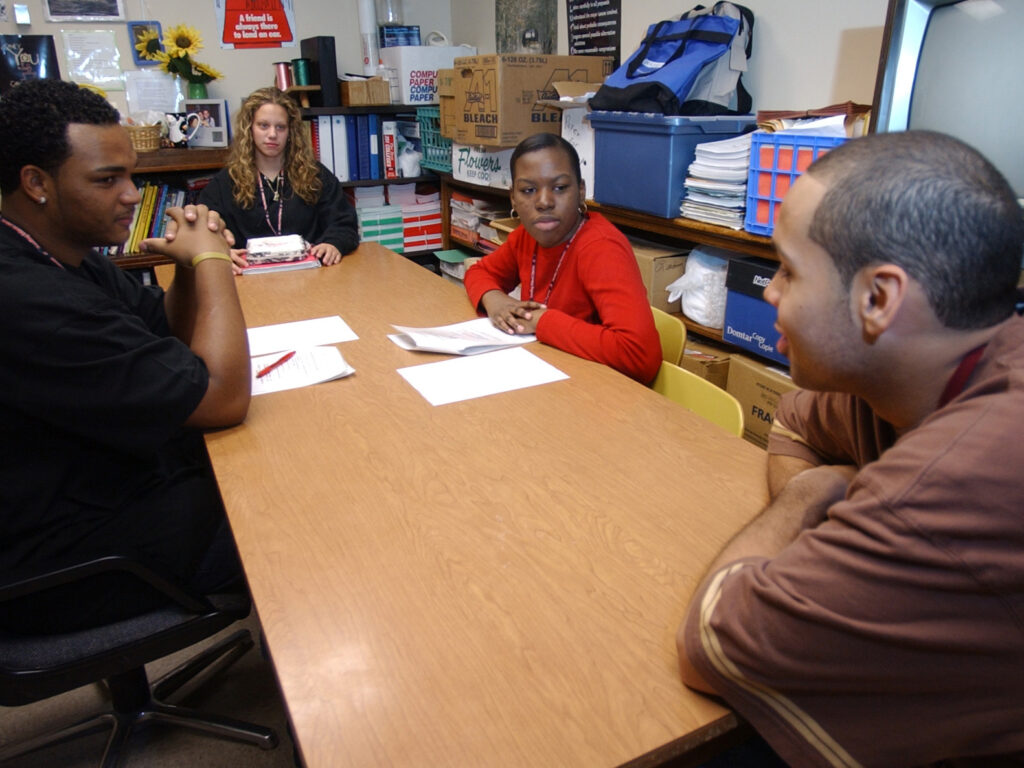
Grantees also applied conflict resolution inside nursing homes and in disputes over end-of-life care, when families and medical teams disagreed. ChildFind used the same tools to help parents get back a child taken by an ex-spouse. The Alban Institute brought the program into churches, helping congregations work through internal conflict. The Conflict Change Center in Minnesota built one of the country’s leading victim-offender mediation programs, sitting a burglary victim and the person who broke into their house down at the same table with the goal of restorative justice versus courtroom punishment.
The Public Conversations Project (PCP) grew in response to abortion clinic shootings in Massachusetts, applying family therapy techniques to help people on opposite sides of the fight hear each other clearly so that disagreement would not turn to violence. Hewlett’s general operating support enabled PCP to refine that model and spread it across the field. Today it’s one of the most widely referenced approaches in deliberative dialogue and collaborative governance.
The foundation also held to a strict rule to stay neutral. “Hewlett was never … inclined toward funding advocates on one side of the issue,” says Toben. That discipline traced back to the foundation’s Environment Program, where Hewlett had already learned that funding one side of a land-use fight could make the dispute worse.
As the field matured, the foundation shifted its practitioner support funding toward broader associations, such as the Association for Conflict Resolution and the Academy of Family Mediators, which helped develop shared training and credentials standards.
In 1992, the foundation expanded the program further, adding a fourth focus area: Consensus-Building, Public Participation and Policymaking. In plain terms, it meant getting everyone affected by policy into the room before a decision is made, rather than after a standoff. “We saw a distinction between intervening in a ripe conflict and addressing the roots of that conflict, which might lie in defects in the policymaking process,” Toben says. “We thought if we can better organize conversations among all of the relevant stakeholders upstream from the outbreak of conflict, we will produce better policy results, and that will avert conflict downstream.”
Toben points to the North Dakota Consensus Council, funded from 1992 to 2004, as one of the clearest examples. The Council was founded in 1990 as North Dakota was still climbing out of the 1980s farm crisis, out of a shared worry among state leaders that public cynicism and partisan gridlock were making it harder to solve problems. Its founding mission was to bring people with different interests to the same table on a policy question and help them reach an agreement everyone could live with, before the debate escalated into a fight.
Going global
The program’s biggest expansion started with a question from the foundation’s own board.
In January 1991, as the Cold War was ending, there was an upsurge globally in civil conflicts and civil wars, Toben recounts, and the board asked whether the conflict resolution tools the program had spent seven years helping develop domestically might apply worldwide.
In response, the foundation looked for people who had already proven a conflict resolution model worked through its prior domestic funding and helped it apply globally, and people already doing related international work independently and helped them expand. Hewlett’s goal was to give those already-proven people and organizations more fuel to accelerate what they were already doing very well, Toben explains, funding that let them extend a working approach.
For example, John Paul Lederach had spent years aiding conflict resolution in Central America before Hewlett began funding his work at Eastern Mennonite University in Harrisonburg, Virginia. The work of John Marks, who founded Search for Common Ground in 1982, is another example. It was Hewlett’s backing starting in 1994 for unrestricted general support that powered Search for Common Ground’s growth into a peacebuilding organization that tailored its methods to different cultures. The foundation was the only funder giving Search that kind of flexibility, and the organization used it to grow and restructure at a scale that project-specific grants could not have supported.
In Burundi in 1995, Search for Common Ground launched the country’s first independent radio station, Studio Ijambo, intentionally staffed with both Hutu and Tutsi journalists. The studio produced news programs and a radio drama called “Our Neighbors, Ourselves.” Surveys found the programming reached 80 to 90 percent of the population, and listeners credited it with helping ease ethnic tensions. In Macedonia, the organization took the same principle to television, producing children’s series that research found measurably softened kids’ attitudes towards other ethnic groups. “One becomes engaged, and then one sees what the possibilities are,” Marks has said of the approach.
By the time Toben left the program in 2000, international work had grown from nothing to around half its budget. In Toben’s opinion, it was the program’s most consequential shift, and the one most responsible for lives saved and costs averted.
Not everything held up as well as intended, and Toben is clear in acknowledging where the program failed and what can be learned.
Hewlett had hoped that, within a decade, university theory centers it funded would eventually support themselves financially, through university assistance or their own fundraising. Most never did. “I can’t say that I saw a path to sustainability for these centers,” Toben says now. “I underestimated the challenge of sustaining an interdisciplinary center at any of those universities.”
He’s just as candid about pushing hard for the 2001 merger of three major professional associations into what became the Association for Conflict Resolution (ACR), a consolidation some grantees felt the foundation drove too aggressively for a funder that prided itself on staying hands-off. But, as Toben notes, in hindsight one never knows the counterfactual of what would have happened without the merger. ACR is still operating today, more than two decades later.
A field fully formed
In 2002, the board voted to approve winding down the program, believing that the conflict-resolution field had matured enough to stand without Hewlett’s support. The program spent its final two years focusing on leaving the field in good shape before formally closing it in December 2004.
Back in 1978, at that folding table in San Francisco, none of the program’s future success was foreseeable. The distance between a playground dispute and a peace accord looks enormous. Yet both run on the same basic idea: Bring the people in conflict to the same table, and give them a way to talk that doesn’t end in more damage.
“This body of work hasn’t disappeared,” Toben says. “The nation and world right now are enduring difficulties. But the Conflict Resolution Program’s ideas and fundamental philosophy hold strong.”