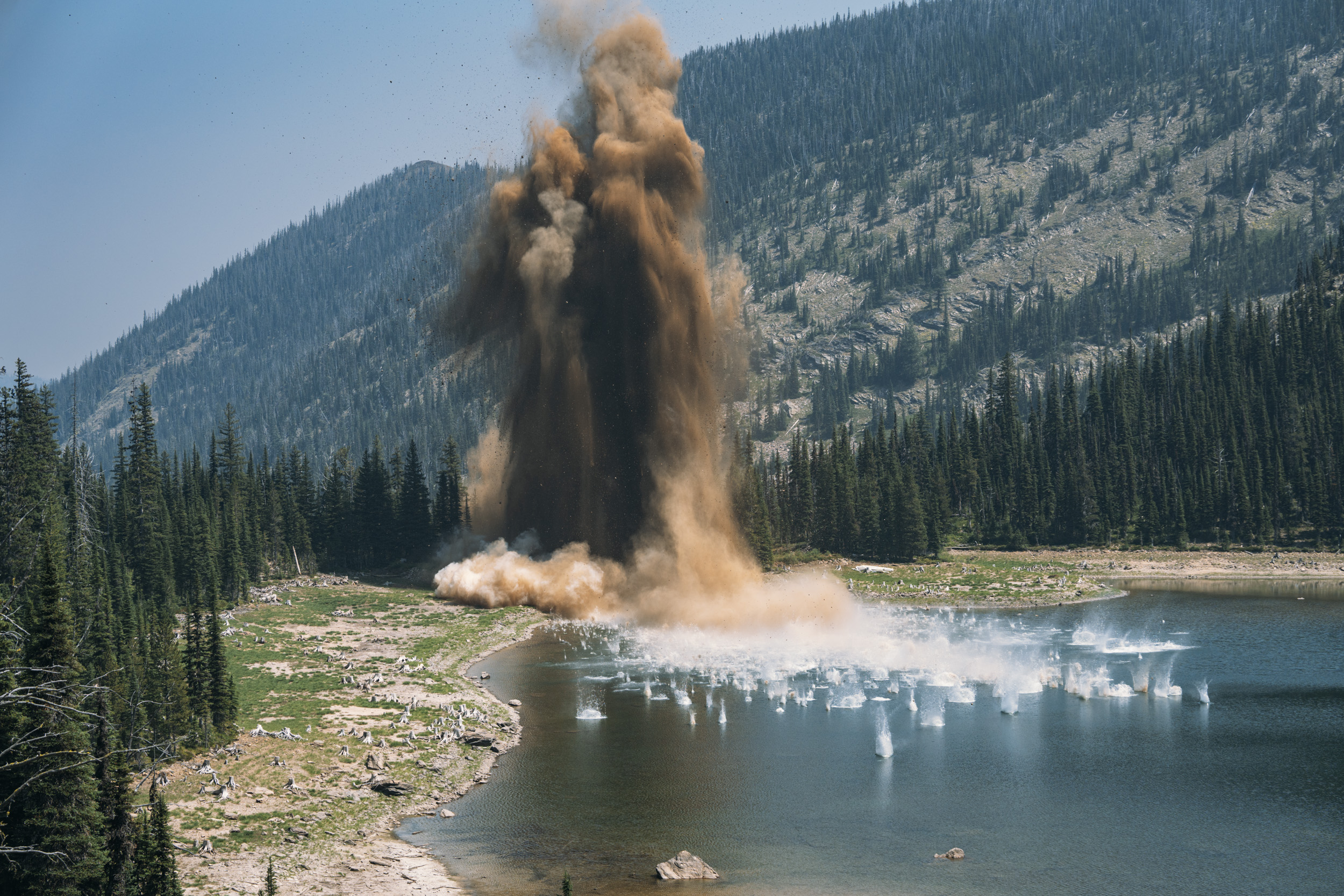
Sometimes destruction sparks renewal — especially when it involves a dam.
Across the country, tens of thousands of dams are at least 50 years old, and most have outlived their intended lifespan. As hydroelectric projects age, water systems are redesigned, and structural problems emerge, many dams no longer serve their original purpose or have become safety hazards.
Removing them opens new possibilities, as the Resources Legacy Fund has demonstrated again and again through the Open Rivers Fund.
Launched with a $50 million grant from the Hewlett Foundation in 2016, Open Rivers Fund operates as a catalyst and facilitator, providing financial resources to spark projects and unifying supporters and decision makers behind them — a model it has fine-tuned over 10 years and more than 130 successful dam and culvert removals across the Western United States.
“When Hewlett made this investment, we knew we were taking a risk. What we couldn’t fully imagine was what that investment might make possible: thousands of miles of rivers reconnected, salmon returning to waters they had been cut off from for generations, and communities once again able to shape the future of the rivers that sustain them,” says Nicole Cordan, Hewlett’s Western Conservation Program Officer. “That is what patient philanthropy can do at its best — trust people with a vision, give them the resources and time to pursue it, and stay with them long enough to see what becomes possible.”
Before 2016, few people saw dam removal as key to healthy rivers and communities. The few groups focused on removals largely operated in silos, their work overlooked and underfunded.
Today, those groups have grown in number and in sophistication, thanks to the Resources Legacy Fund’s resources and convening power.
The largest dam removal in U.S. history
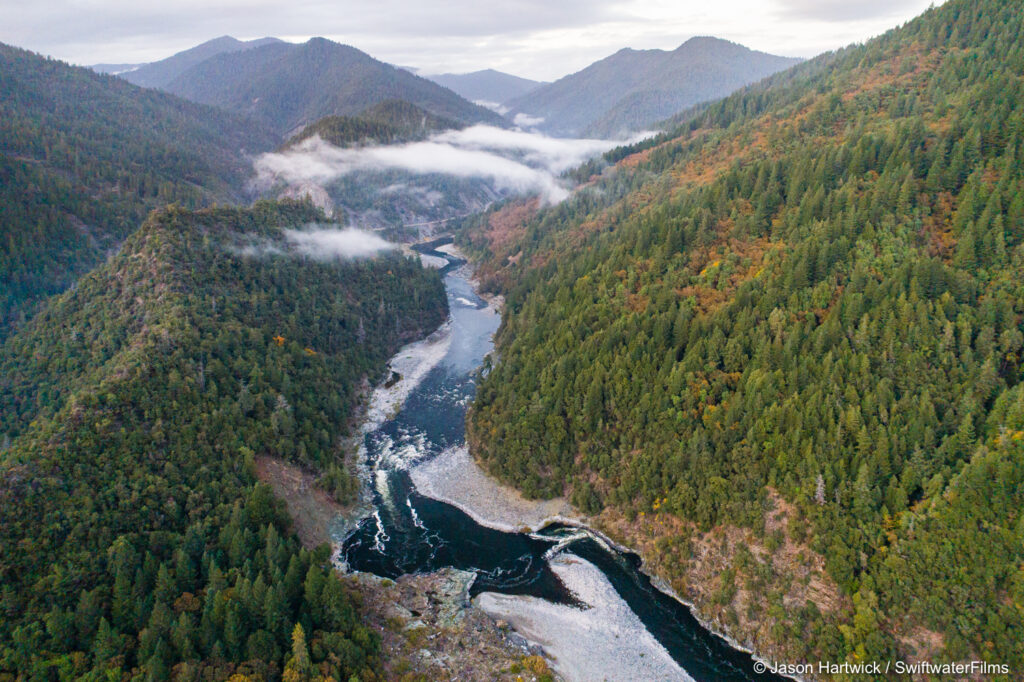
The impact of this work is clearest on the banks of the Klamath River, which runs between Oregon and California.
The Klamath River Basin is the ancestral home of five Native California Tribes — the Yurok, Karuk, Hoopa, Shasta, and Klamath Tribes — who have led the effort to remove the dams and restore salmon populations to the river.
Between 1918 and 1962, four dams were constructed on the northern stretches of the river as part of a hydropower project that generated relatively little electricity at a high cost. Beyond the money needed for operations and upkeep, the dams’ reservoirs frequently bred toxic algae blooms, endangering wildlife and human health. They cut salmon and steelhead off from hundreds of miles of habitat. And they disrupted the culture and livelihoods of nearby Tribes, including the Yurok Tribe, Karuk Tribe, Hoopa Valley Tribe, Shasta Indian Nation, and Klamath Tribes, who have long cared for and relied on the river’s health and its salmon runs.
Beginning in the early 2000s, the Tribes led a coalition of environmental and fishing groups that spent more than a decade making the case for removing the outdated dams. Through years of education and negotiation, the Tribes and their partners navigated significant disagreements that sometimes left success in doubt. However, philanthropic support helped sustain them. The Hewlett Foundation provided resources to several of the groups involved, including through the Resources Legacy Fund, which funded communications coordination and stakeholder outreach, preremoval monitoring, a feasibility study on the best uses of the land surrounding the dams, and a lessons-learned guide for future dam removals.
In 2022, these combined efforts secured the necessary approvals to move forward with the largest dam removal in U.S. history. Demolition took another two years, and the impact was immediate.
Within weeks, Tribal and state biologists spotted Chinook salmon moving upstream. More than 7,700 salmon traveled upriver that fall, reaching spawning areas the dams had blocked for more than a century.
Monitoring efforts throughout the next year showed marked improvements in water quality, with a massive drop in harmful algal blooms and associated toxins and a return to natural water temperatures.
By the second fall after the dams came down, nearly 40,000 Chinook salmon swarmed up the Klamath and its tributaries, where access to almost 450 miles of historic habitat could help Western salmon populations reverse yearslong declines.
Meanwhile, customers of PacifiCorp, the utility that owned the dams, are projected to save more than $100 million, since the utility no longer has to spend tens of millions of dollars each year to maintain the dams.
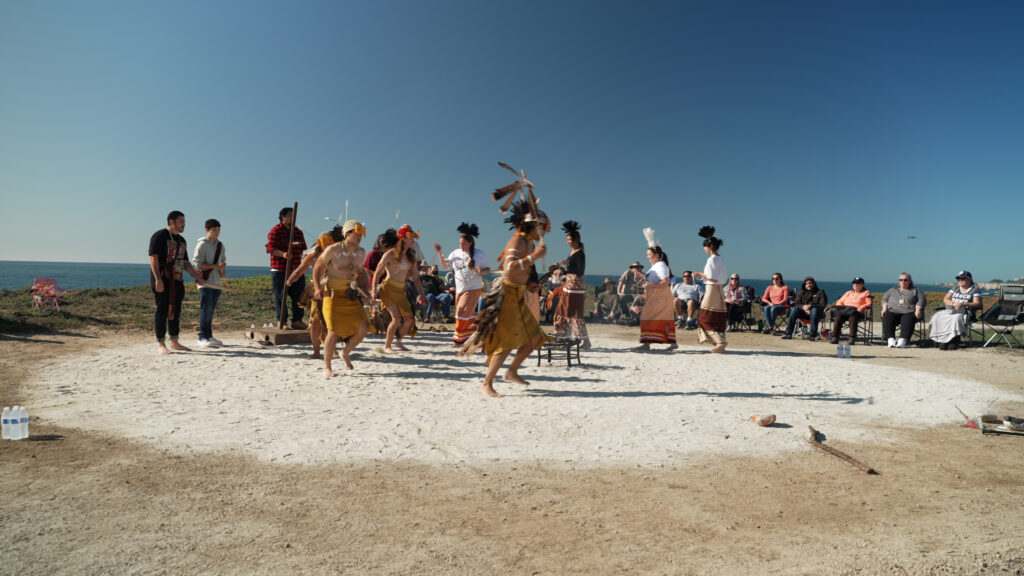
For the five Tribes that call the Klamath River Basin home, the return of salmon and a healthier river — the result of Tribal-led advocacy — offer hope for the restoration of their practices and traditions. Youth from the Yurok Tribe, Karuk Tribe, Hoopa Valley Tribe, Shasta Indian Nation, and Klamath Tribes are now paddling the river’s free-flowing waters for the first time in four generations, carving traditional canoes from redwood, learning dances and songs from their ancestors, and reconnecting with their languages.
The results surpass what the Hewlett Foundation had hoped for when making that $50 million grant to the Resources Legacy Fund.
Awarding such a large sum up front “was a first-of-a-kind thing, and it was a pretty breathtaking prospect,” recalled Michael Scott, who worked on Hewlett’s Western Conservation portfolio when the Resource Legacy Fund launched the Open Rivers Fund. “We believed that level of funding, and the ability to think many years ahead, would bring people together and foster a movement.”
The theory was that patient philanthropic investment could establish a systematic process for dam removals, raise public awareness and acceptance of that process, and show policymakers the benefits of funding river restoration.
Ten years later, Hewlett’s investment proved the theory correct.
Over 130 dams and counting
Dam removal isn’t always an obvious, or necessarily welcome, proposition.
“Taking a dam down goes against most people’s understanding of what dams are for,” explains Phil Ginsburg, Resources Legacy Fund’s president. “The default view is that this infrastructure has intrinsic value that will last forever.”
But that view is slowly changing with each removal Open Rivers Fund supports — 133 and counting.
Open River Fund’s project portfolio ranges from massive concrete structures that take years to bring down to small, simple rock barriers that take months. Collectively, these removals have reconnected over 6,600 river miles and restored 9,400 acres of habitat across 70 watersheds in 11 states.
We learned early on that you don’t need to focus exclusively on big projects to produce big impacts.
Shara Sparks, senior program officer for Resources Legacy Fund
And every dollar Open Rivers Fund has spent, including on organizational overhead, has unlocked an additional $17 from private, federal, state, and local funding, bringing in more than $870 million in support for its projects.
The size of Hewlett’s grant let Open Rivers Fund build a varied portfolio of river reconnections, backing many promising projects and providing the flexible support needed to keep them moving.
“We learned early on that you don’t need to focus exclusively on big projects to produce big impacts,” noted Shara Sparks, senior program officer for Resources Legacy Fund overseeing the Open Rivers Fund. “Taking a 70-foot piece of concrete out of a river could reconnect seven miles of high-quality salmon habitat and remove a public safety hazard from a watershed, for example, while replacing two small irrigation diversion dams with instream pumps could reconnect 180 river miles while providing the landowner with a modernized and more efficient irrigation system. Both are consequential, and both are worth pursuing.”
Open Rivers Fund also serves as a convener, building a unified field of removal advocates and cultivating relationships with more than 400 organizations deeply connected to local communities throughout the West. These partners help ensure all voices are heard in decisions about how and why to proceed with a removal. The Open Rivers Fund brings together and supports input from a wide range of stakeholders, including local landowners, Tribes, government decision-makers, community groups, and local agencies.
The more dams it removes and rivers it reconnects, the more benefits emerge, and the more community support grows. Restoring natural river flows produced a wide range of both ecological and community benefits. It improves water quality by reducing the conditions that breed harmful insects, algae, and bacteria. It also removes the risk of catastrophic dam failure, which endangers the health and safety of downstream communities, while re-establishing floodplains that can better absorb floodwater, and creating firebreaks that can slow wildfires. Some of its projects have swapped dams out for modern irrigation systems that deliver water more efficiently to farms and ranches while reducing costs.
Other removals have made it possible for nearby Tribes to once again fish and farm along a river’s waters. Open Rivers Fund often makes grants directly to Tribes, providing the resources to hire lawyers, biologists, communications professionals, and other technical experts to ensure Tribal voices were heard and respected throughout the removal process. In many instances, Open Rivers Fund continued funding Tribes after the dams came down, to support their leadership on river restoration efforts.
And then there are the economic benefits. Removal is often far less expensive than ongoing maintenance. Decreased costs for utilities generate savings for ratepayers. Lower flood risks mean avoided emergency response and public safety costs. And new opportunities for river recreation, tourism, and commercial fishing generate new tax revenue, community investment, and jobs.
Even greater potential ahead
Resource Legacy Fund knows its work through the Open Rivers Fund has just begun.
Over the next 10 years, it aims to directly support at least 200 additional removals, with more than 116 projects already underway. It also wants to deepen investment in the field, supporting dam removal practitioners and advocates across the country to build the capacity necessary to remove 1,000 dams per year. And it’s aiming to amplify community-centered stories about successful projects that can broaden support for greater public investment in removals.
Of course, it also knows that the work of river conservation doesn’t end with a dam’s removal. It will take years to restore the 2,200 acres once submerged behind the Klamath dams, for example.
The Open Rivers Fund intends to be there each day — and Hewlett is right behind it.