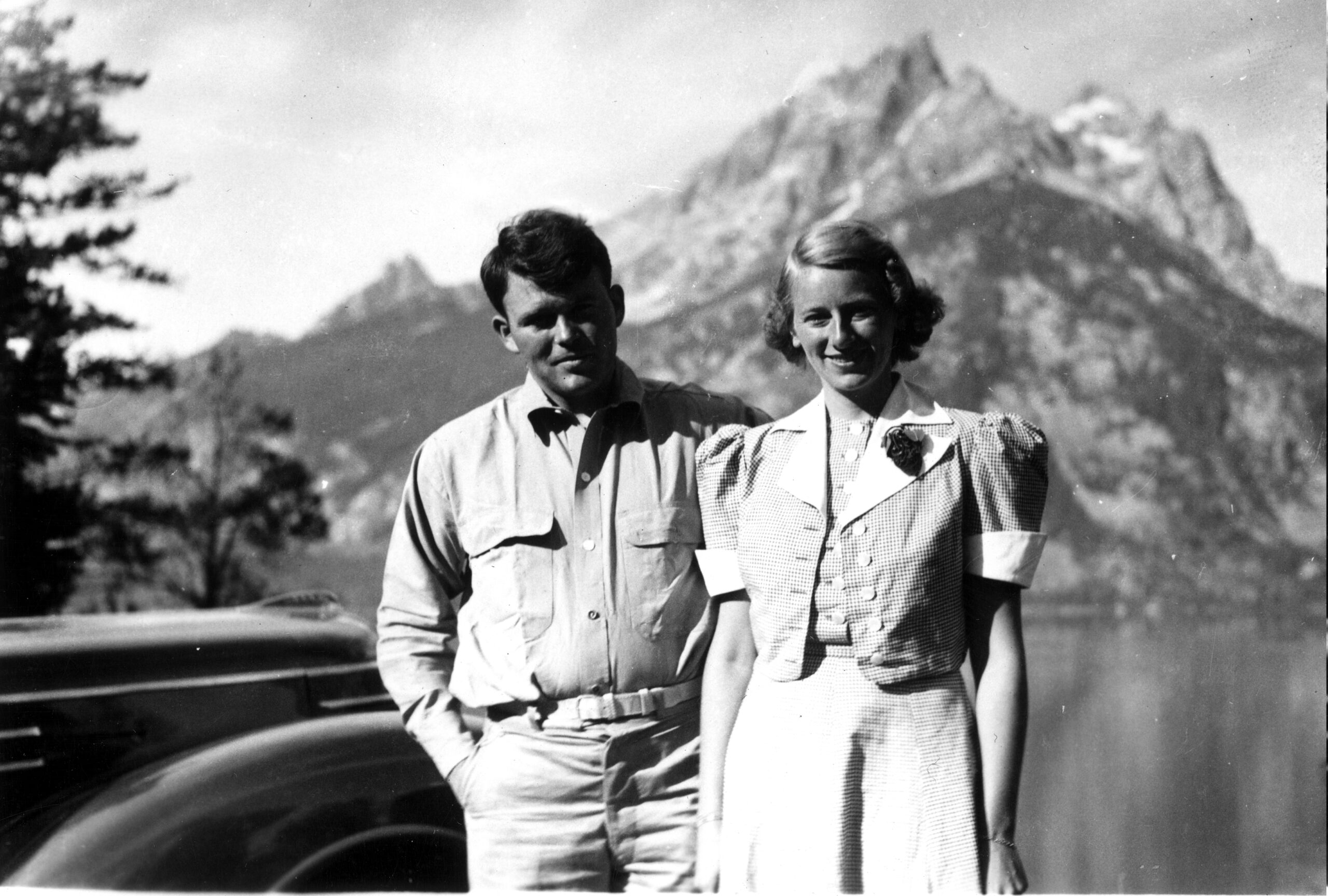
William “Bill” Hewlett and David Packard tossed a coin to decide whose name would come first on the business they started together in 1939 in a Palo Alto, California garage. But when it came to giving away the fortune that followed, Bill left nothing to chance.
True to his engineer’s mind, Bill approached philanthropy the way he approached electronics: methodically and patiently. He liked to say, “Never stifle a generous impulse,” though he was far from impulsive. For at least a decade, he studied how others gave and weighed his options, determined that his giving would have the greatest possible impact on people’s lives.
His philanthropy was also built on his family’s commitments. Bill’s wife, Flora, was a UC Berkeley graduate, and her father had been an early conservationist. The Hewletts and their children were musicians, hikers, and community volunteers.
When Bill and Flora finally established a foundation, they started with the simple conviction that thoughtful people, working together, could make life measurably better. On November 27, 1966, Bill, Flora, and their eldest son, Walter, signed the papers incorporating The W. R. Hewlett Foundation.
The foundation wasn’t conceived as a retirement project to polish a personal legacy. It was a startup, driven by the passion of its founders and an intentionally open mandate to promote the “well-being of humankind.” Sixty years later, that mandate still drives the foundation.
A checkbook and a conviction
For six years, Bill and Flora ran the foundation from their Palo Alto home, what Walter would later call “the living room years.” There was no staff, no office, and no formal framework — just the family, a checkbook, and a clear sense of the issues they wanted to support and where people needed help.
Beyond their walls, Santa Clara County (home to Palo Alto) was transforming. Its population roughly doubled between 1960 and 1980, from 642,000 to nearly 1.3 million. Postwar suburbs spread, venture capital arrived, and the semiconductor industry earned the region the nickname “Silicon Valley.”
Born into this rapidly changing world, the foundation created space to try new ways to invest in causes Bill and Flora cared about and that mattered to the nation and the world.
Believers in bright minds, strong organizations, and thriving communities
The Hewletts early giving fell into five areas: education, the natural environment, the performing arts, reproductive health, and the needs of the Bay Area communities. Each grew out of the founders’ own lives, and each is connected to the foundation’s work today.
Bill’s path from Stanford to MIT convinced him that strong universities were essential to a functioning democracy. For a decade, steady grants to Stanford and UC Berkeley supported professorships, libraries, and discretionary funds. The funding helped departments recruit and keep top faculty, expanded students’ access to research collections, and gave administrators flexibility to respond to needs that a rigid budget couldn’t accommodate. At MIT, grants went to the electrical engineering and electronics program that had launched Bill’s career.
But the foundation’s reach went well beyond the founders’ alma maters. In 1974, it gave $50,000 to the endowment of Spelman College in Atlanta, a historically Black college for women. At the time, many HBCUs were chronically underfunded and relied on gifts like this one to stay open and keep tuition within reach. During its first decade, the foundation also made a handful of smaller K-12 grants, including to a school for children with learning disabilities, support for a poetry program in Berkeley elementary schools, and summer music programs for gifted, low-income East Bay students.
Flora’s devotion to theological education shaped another set of grants. In 1972, the foundation endowed a Chair of Sacred Music at the San Francisco Theological Seminary, funding scholarship and teaching in a field that had few other institutional supporters. Gifts to the Graduate Theological Union from 1973 to 1975 built a shared library, giving scholars across multiple seminaries access to resources none could have assembled alone.

Long before conservation became a focus of his philanthropy, it was personal for Bill, rooted in a lifelong love of fishing, hiking, and photographing wildflowers across the American West. In 1969, the foundation gave $1,000 to the Sempervirens Fund toward preserving redwoods; by 1971, it was granting $50,000 to Save the Redwoods League and $100,000 to The Nature Conservancy for land preservation work across California, support that grew into a recurring partnership, including a 1975 gift to help preserve a stretch of Elkhorn Slough at Moss Landing. By the mid-1970s, the foundation was underwriting field representatives for the Sierra Club Foundation and The Wilderness Society and supporting the Point Reyes Bird Observatory’s work protecting the Farallon Islands. That commitment to the West’s lands and waters lives on in the foundation’s Environment Program today.
Bill and Flora also believed the arts didn’t just entertain a city; they helped build it. When the foundation made its first matching gift to the San Francisco Symphony in 1967, the orchestra was, by its own later accounts, financially fragile, and its musicians didn’t yet have full-year contracts. The foundation provided general operating support throughout its first decade. Early support for KQED, the Bay Area’s public broadcaster, helped keep independent journalism and educational programming on the air and free to anyone with a television or radio.
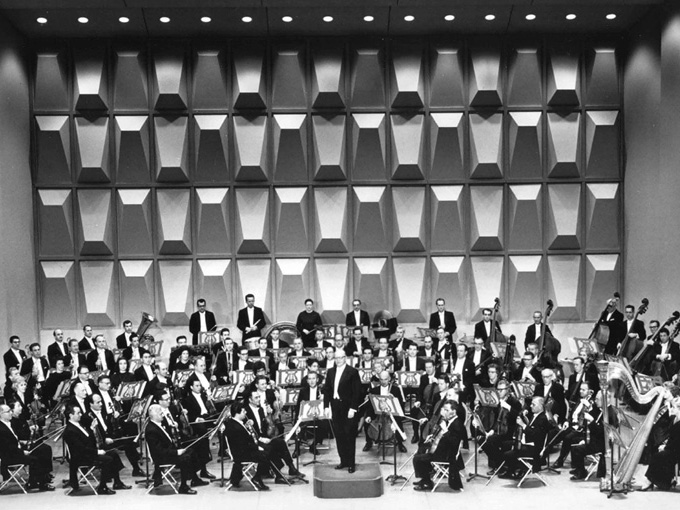
With the Arts and Humanities Program, the Hewlett Foundation hopes to help foster, particularly but not exclusively in the San Francisco Bay Area, the lively artistic and intellectual climate essential to the good life and to a civilized society.
Foundation annual report, 1977
The foundation’s arts giving soon widened. It funded the American Conservatory Theater, which trained generations of actors and brought professional theater to Bay Area audiences. It also funded the Exploratorium, whose hands-on approach reshaped science museums worldwide. By the end of the first decade, it was also supporting community music organizations, youth music education, and small grants to young organizations like Berkeley Repertory Theatre, which it still supports today. In 1977, the foundation’s first formal annual report described this kind of artistic and intellectual climate as “essential to the good life and to a civilized society,” the same belief that guides the foundation’s Performing Arts Program today.
From the very first year, Bill and Flora acted on the belief that people deserved access to family planning and the freedom to shape their own futures. That year, two grants to Planned Parenthood provided general operating support for its reproductive health and education services. That support continued every year, including $110,000 to the national federation in 1970 alone, roughly $950,000 to $975,000 in today’s dollars.
By 1975, the foundation’s grantmaking that year had grown to $5.79 million across 29 nonprofit grantees, nearly all in California. By its 10th anniversary in 1976, it had given away roughly $15.3 million, reaching university classrooms, concert halls, broadcast outlets, clinics, and libraries across the Bay Area and beyond.
The HP way, applied to giving
Beyond the causes and organizations they supported, Bill and Flora cared just as much about the practice of philanthropy itself. They wanted their foundation to reflect the values they lived by: humility, collaboration, and humanism. They considered it essential to always work in partnership with others, and they wanted the foundation to tackle problems facing the wider world while still making a difference close to home, in the Bay Area.
The HP Way — the legendary management approach at Hewlett-Packard — found its corollary in the Hewlett Foundation’s philanthropy. Bill trusted the people closest to the work, believing that approach would lead to creativity and innovation. He placed the same trust in his grantees as he placed in HP’s engineers, illustrated by his consistent practice of providing unrestricted support, which enabled institutions to use funding where they needed it most, not where a donor preferred.
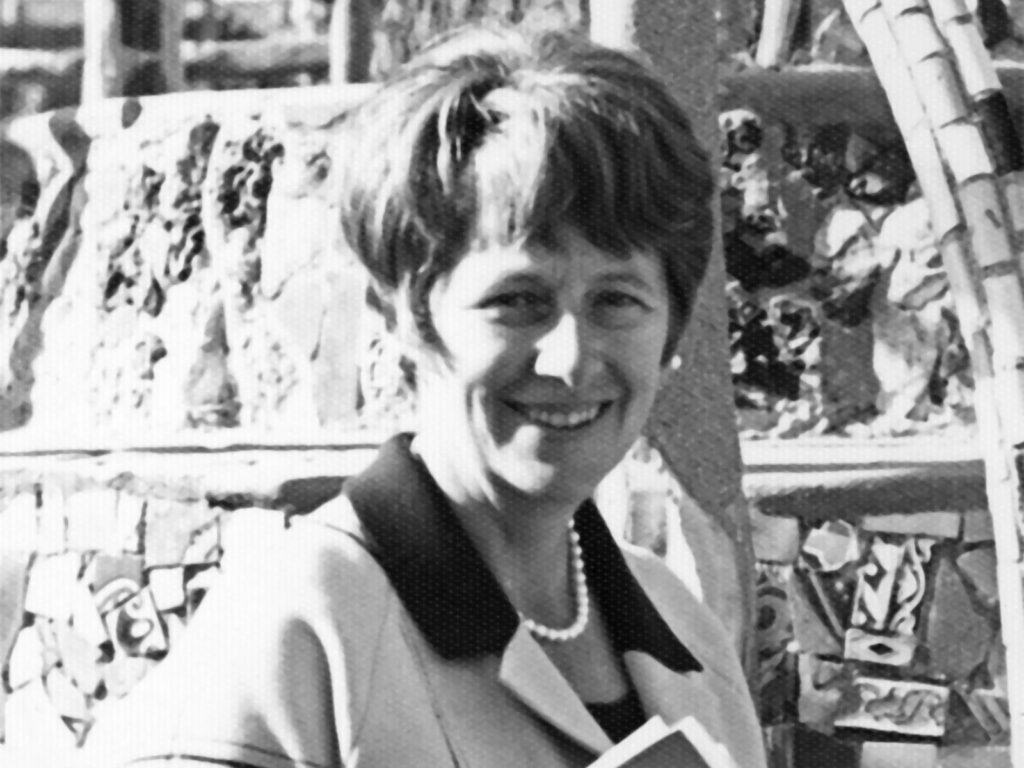
Flora’s passing was ‘a reminder of the natural limit on time anyone has to try to make the world better, and a call to focus on the things that matter most.’
Hewlett Foundation historical records
Flora’s enduring influence
Just over 10 years after the foundation’s founding, Flora Lamson Hewlett died in 1977 at age 62. She had remained an active participant in board meetings until just weeks before her death. The foundation’s historical record describes her passing as “an emotional blow to Bill and their children — a reminder of the natural limit on time anyone has to try to make the world better, and a call to focus on the things that matter most.”
Shortly after, the foundation was renamed The William and Flora Hewlett Foundation in her honor. It was a fitting tribute to the woman whose passion for the arts, conservation, and women’s rights had given the foundation some of its deepest roots. Far from being a passive benefactor, Flora had contributed to every major decision of the foundation’s first decade.
Sixty years after those papers were signed in a Palo Alto living room, the foundation that bears both their names still works from the conviction they started with: that people, when given the chance, will choose to build a better future.