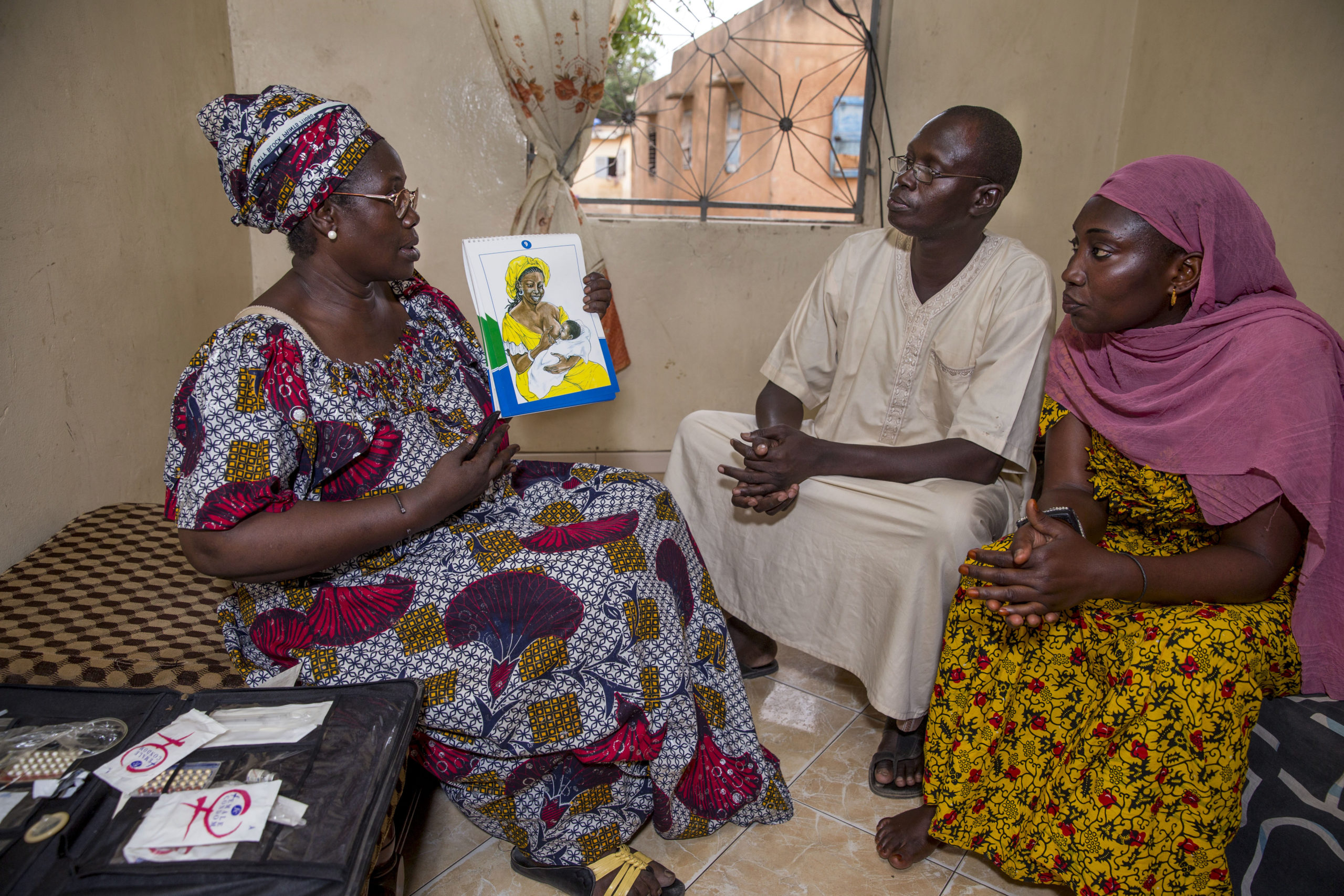
Before 2011, only around 11% of women in Francophone West Africa used a modern method of contraception, and the subject was often too taboo to discuss in public. The region has since added more than four million new voluntary family planning users, and the topic is discussed openly by ministers, religious leaders, and heads of state, and embraced in national policy.
Over 15 years, nine governments helped create this shift together with a growing list of funders, civil society groups, researchers, community advocates, and religious leaders. “From the very beginning, the Ouagadougou Partnership was always meant to be a partnership and not a project,” says Marie Ba, director of the coordination unit that runs the effort. “A project starts with a donor’s objectives and reports back. This one was defined by the people who’d actually have to live with the results.”
The Hewlett Foundation was one of the founding funders in 2011 and still supports the partnership today.
Thanks to this collective effort, family planning is now a subject families can discuss more openly in public and act on, and millions of women now have reproductive health options they didn’t have before.
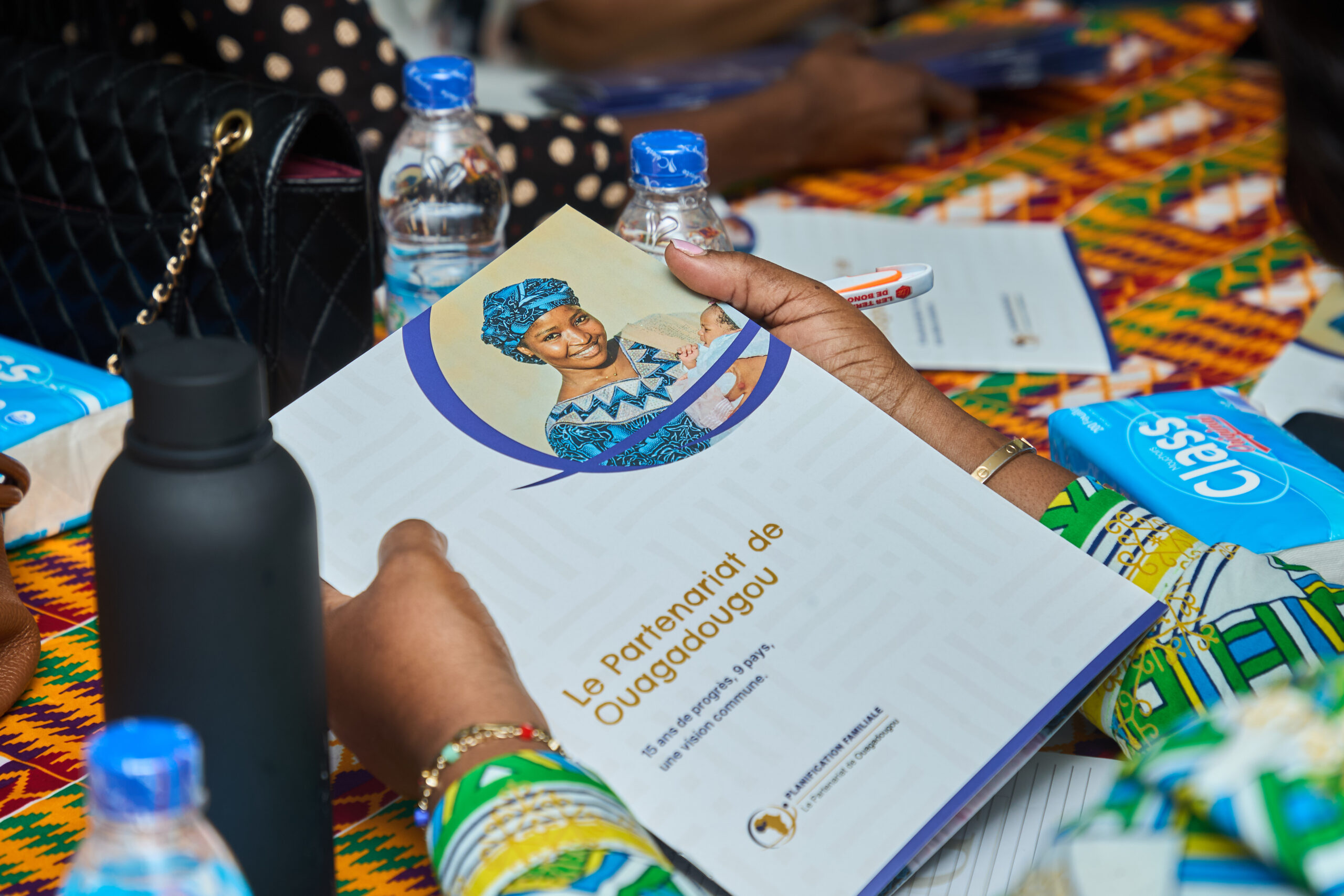
Hear from our partner
A conversation about 15 years of advancing reproductive health across nine West African nations.
Nine countries, one challenging subject
Before 2011, family planning barely registered as a policy conversation in Francophone West Africa, and women discussed it only in secret, afraid of social stigma and going against social norms that value fertility. Part of the silence traced back to colonial law. A 1920 French statute banning the promotion of contraception and abortion applied across France’s colonies, and it stayed on the books in many of these countries after their independence. By the mid-2000s, most governments had formally repealed it, but fear and uncertainty lingered long after the legal change. Cultural and religious norms favoring large families reinforced that silence. The average woman had four to eight children throughout her reproductive years and only a little over 10% used modern contraception.
Many global funders had not invested in the region because of language barriers, the high cost of starting up work in small countries, and frequent political instability and weak governance in some countries. Then in 2009, President Obama’s repeal of the Mexico City Policy, the so-called global gag rule that had blocked U.S. funding to many international family planning programs, freed up money as well as an appetite to tackle the work. That’s when four funders decided to invest together in these nine countries, taking a regional approach. They were the William and Flora Hewlett Foundation, the Bill & Melinda Gates Foundation, USAID, and the French government.
Together with the governments of Benin, Burkina Faso, Côte d’Ivoire, Guinea, Mali, Mauritania, Niger, Senegal, and Togo, they launched the Ouagadougou Partnership (OP) in February 2011 (named for the capital of Burkina Faso where the founding conference took place), committing to align donor funding with government priorities, and to increase it. The commitment focused primarily on increasing the number of new users of family planning in the nine countries. They also established a coordination unit to run the partnership’s day-to-day operation, jointly funded by Hewlett and Gates. The David and Lucile Packard Foundation joined as a third coordination-unit funder three years ago, and what started as four funders of family planning overall has grown to more than 10.
Expanding access to reproductive health
In its first decade, the partnership helped add more than four million new voluntary contraceptive users, bringing the regional total to roughly seven million, and donor funding for family planning in the region nearly tripled, growing from $80 million to $212 million.
Track20, the data initiative that helps the Ouagadougou Partnership measure progress, estimates that this growth in family planning users averted more than 21 million unintended pregnancies and saved tens of thousands of women’s lives, who previously had a high risk of dying from self-administered abortive measures or giving birth by themselves. The partnership’s goal for 2030 is to nearly double contraceptive use again, this time to 13 million users across the nine countries.
Marie Ba, who directs the Ouagadougou Partnership Coordination Unit (OPCU), has watched the shift in what people are willing to say out loud. “When I first joined the organization, you could hardly talk about family planning,” she told Knowledge Success in 2023. “You had to use the term ‘birth spacing’ to be listened to and to make everyone comfortable in the room.
“I am often asked what the recipe for the partnership’s success is,” Ba said. “For me, it is largely having allocated sufficient resources for a coordination unit to keep this partnership thriving.”
What changes when governments, religious leaders, and civil society sit at the same table
“The Ouagadougou Partnership is more than a partnership; it’s a movement. Ministries of health, civil society, youth, religious leaders, and donors came together by choice, and it’s their commitment, sustained day after day over 15 years, that has carried this work forward,” says Margot Fahnestock, a former Hewlett Program Officer from 2010 to 2018 who helped launch the OP.
One of the OP’s signature moves puts that commitment into practice: the donor caravan, a multi-day trip that puts funders, government ministers, and civil society leaders on the same bus, moving between clinics and government offices in one or two countries at a time. Janet Holt, former Hewlett OP program officer, recalls attending one caravan to Niger that led to a new government office dedicated to family planning, the result of that week’s joint discussions among governments, donors, and civil society.
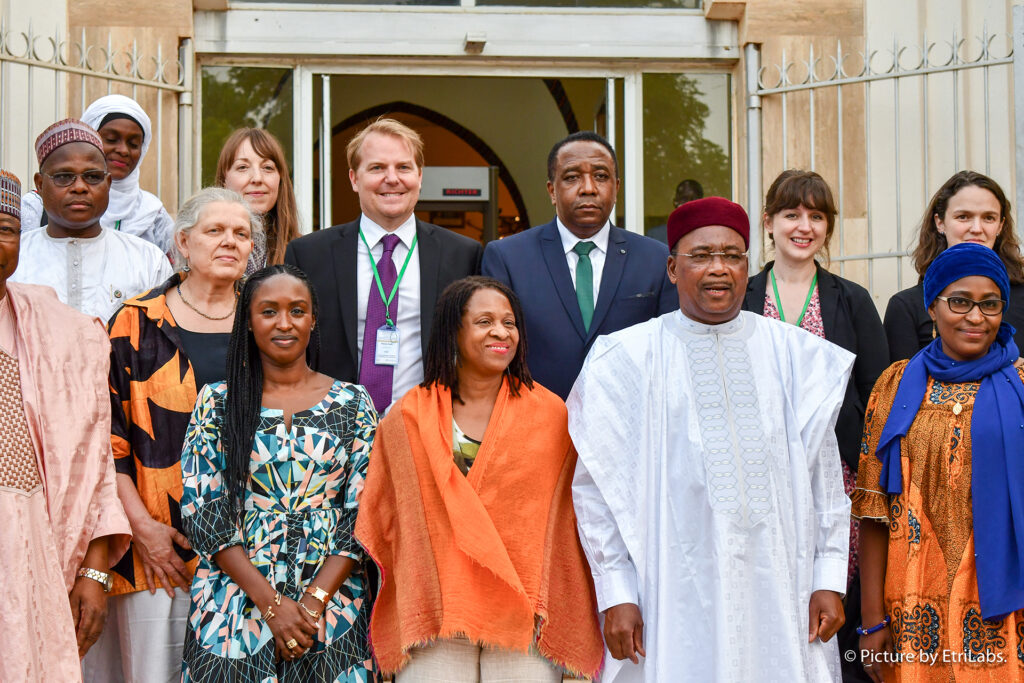
Another paired Benin and Togo, two small neighboring countries, and had health ministry staff from each country attend the other’s sessions.
Religious leaders get a seat at the table too. The OP has long partnered with a network called CRSD, Cadre des Religieux pour la Santé et le Developpement (French for “Coalition of Religious Leaders for Health and Development”), an interfaith group of Christian and Muslim leaders who, among other advancements, developed sermon guides addressing family planning directly.
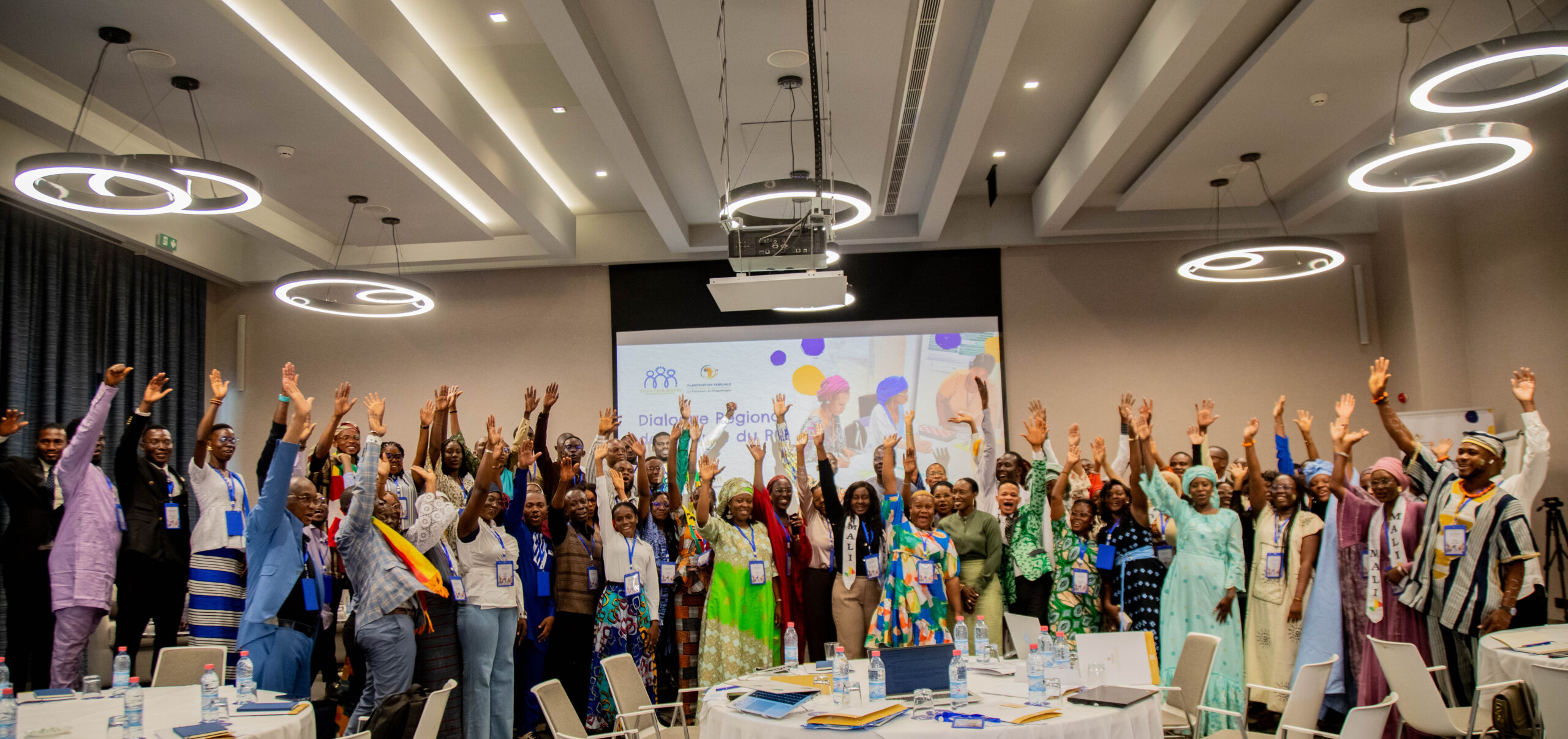
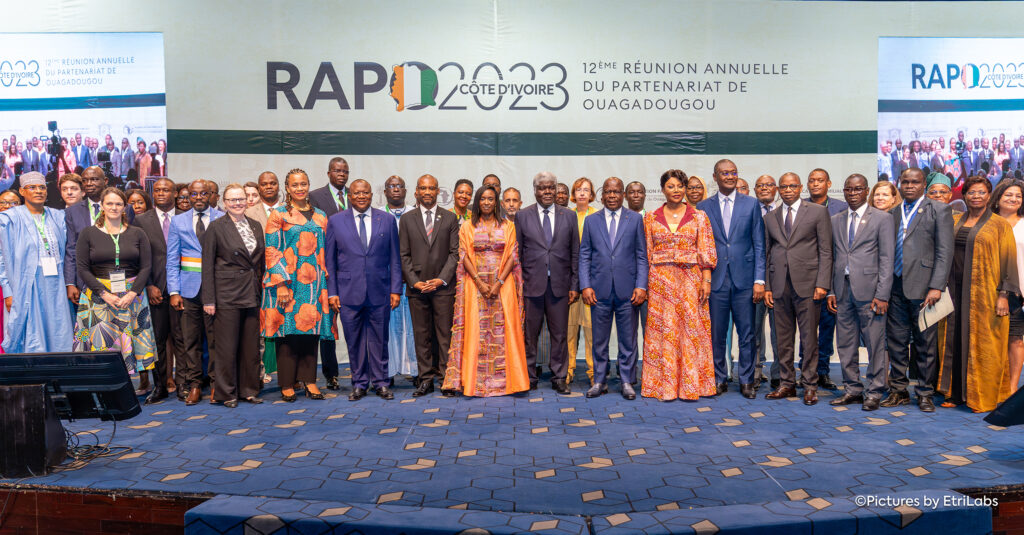
“[The religious leaders are] a major constituency we convene and bring together every year to support their work,” Holt says. The OP convenes religious leaders as a formal constituency at its annual meetings, alongside government ministers, youth representatives, and civil society groups.
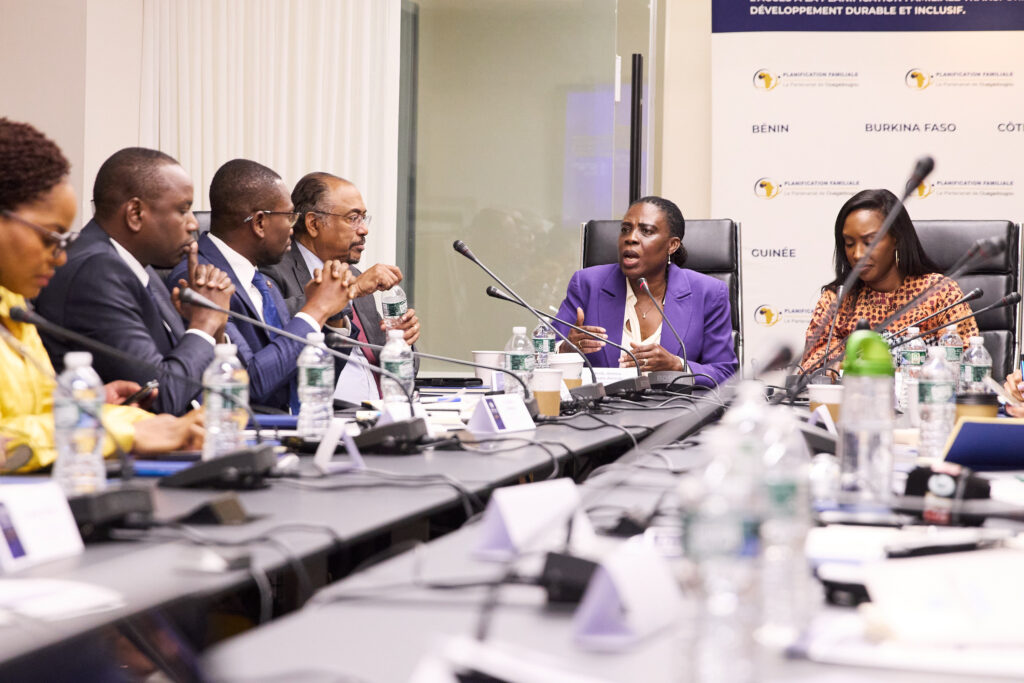
I believe the real catalyst was the realization that we have far more in common than what separates us. We don’t bring people together simply to have dialogue. We create the conditions for dialogue to become decisions, and for decisions to become action.
Marie Ba, Director, Ouagadougou Partnership Coordination Unit
“I believe the real catalyst was the realization that we have far more in common than what separates us,” Ba says. “We don’t bring people together simply to have dialogue. We create the conditions for dialogue to become decisions, and for decisions to become action.”
Youth engagement is another piece of the strategy that’s working. At Holt’s first OP annual meeting, the marquee session staged a debate between religious leaders and young people on the platform. Today the partnership employs paid youth leaders in each member country, who help design the annual meeting’s agenda before it opens rather than react to it once it starts.
Ba counts youth inclusion among the partnership’s proudest shifts. Regarding successes in relation to partnerships, Ba has said that in a region where roughly 60% of the population is under 24, she has pushed to treat young people “not only as beneficiaries, but as agents of change.”
Funding the conditions for change
In addition to funding the partnership’s coordination, Hewlett has made significant investments in long-term sexual and reproductive health work and institution building across Francophone West Africa. The nine countries run their own health systems, and the OPCU coordinates rather than delivers direct services. Bilateral donors (government-to-government) and other foundations both play a role, and a growing share of the funding now comes from the countries’ own domestic budgets.
“What we’ve done in Francophone West Africa for the last 15 years is help create the conditions for significant change,” Holt explains. Her theory of successful philanthropy in the region reflects the central belief of the Hewlett Foundation: give core, flexible, multi-year support to organizations doing the work, and don’t dictate what that work should look like. “All of our grantees want more core support,” Holt says. “It’s allowed them to grow as an organization, take risks, and innovate — all the good things that funders want to happen when you give core support.”
The OPCU itself, she believes, is proof the model works at a regional scale, functioning as “the connective tissue”: a single platform where governments, researchers, religious leaders, and young advocates find each other and move together.
Ba describes the same idea from the other side of the table, framing the OP’s design as a deliberate break from how most donor-funded work operates. “What it requires every day is humility, trust, diplomacy, and constant dialogue,” Ba says.
She points to how the partnership rebuilt its research agenda from the ground up, with country health directors asking, “Why shouldn’t our research first answer the questions that matter most to us?” Ba recounts that USAID’s regional office in Accra, Ghana, later adopted some of those same country-identified priorities for its own research agenda, before the agency was dismantled. “Success is not measured by how well countries implement someone else’s agenda,” Ba says. “It is measured by how effectively the international community supports country-owned solutions.”
After 15 years, what comes next
At the end of her eight-year term as program officer in July 2026, Holt reflected on what the partnership taught the foundation about its own practice.
“We’re not the ones to create something from scratch,” she says, “but to notice when something is possible, when something is already emerging, and to give it wings with resources.” She pointed to Le Centre ODAS (Organisation pour le Dialogue pour l’Avortement Sécurisé), a newer regional coalition on abortion access that Hewlett funds, built by adapting lessons from the OP’s structure, as evidence that the model travels.
What comes next, Holt says, depends heavily on funding stability and growth. External funding has been critical in the region since 2011, and last year’s USAID shutdown cut deeply into funding for contraceptive commodities, even as the broader base of funders has grown. Incoming Program Officer Hilary Mathews agrees with Holt’s assessment, adding that the strength of the Ouagadougou Partnership is a key asset for the region during this time of disruption and transition. “The Partnership provides a forum for information sharing and collective accountability that is indispensable as countries adapt to major changes in the family planning landscape.”
Fifteen years ago, discussing contraception in public felt like a radical act. Today it’s routine, and the conversation has moved on to harder questions: how to reach unmarried young people, and how to keep nine very different countries, from Niger to Côte d’Ivoire, working toward the same goal.
Ask Ba what she’d want people to know about the Ouagadougou Partnership 60 years from now, and she doesn’t hesitate.
“I hope they will understand that these nine countries chose cooperation and collaboration around a shared ambition over isolation,” Ba says. “It was about building a movement led by African countries, for African countries, with governments in the driver’s seat.” When nations unite around a shared purpose and place people, especially women and young people, at the center of development, she says, “they can change the trajectory of an entire region.”
The nine countries still have work ahead of them, and since 2025 that work has gotten harder. The dismantling of USAID, long the largest bilateral funder of family planning and a core partner of the Ouagadougou Partnership, has disrupted funding and supply chains in several of the partnership’s countries. But in each, thanks in large part to the Ouagadougou Partnership, there’s a room, an annual meeting, a mosque, a church, or a ministry office where people talk openly about reproductive health and family. Reproductive health services and products are now available from primary care providers and pharmacies, and women can receive counseling when they come in for other care. Civil society is stronger and more engaged, and policies have changed, improving health systems and strengthening legal protections for women’s health in a region where before 2011, family planning and reproductive health were silent topics that remained in the shadows. The task now is to protect those gains and make sure services are there when women want them.
Read the interview with Ouagadougou Partnership Director Marie Ba